
Tuesday, 27th August 2024.
CreditEconomy News Interview
…Over 500,000 people read our news story, number still counting

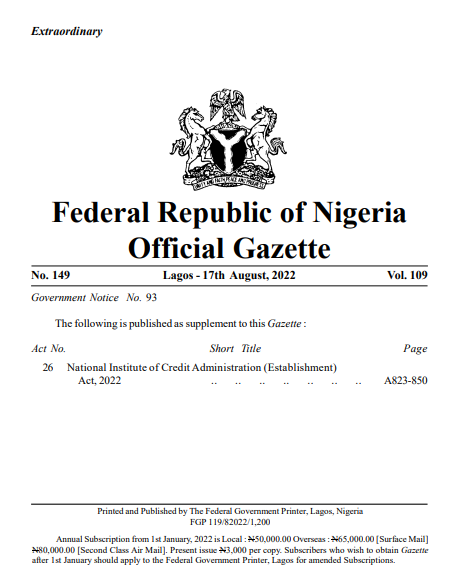
THE PROFILE OF THE NATIONAL INSTITUTE OF CREDIT ADMINISTRATION (ESTABLISHMENT) ACT NO.26 OF 2022
The National Institute of Credit Administration (Establishment) Act No. 26 of 2022 is a groundbreaking piece of legislation that aims to revolutionize the credit industry in Nigeria. This Act establishes the National Institute of Credit Administration (NICA) as the apex and only professional body responsible for regulating and promoting the practice of credit management across various sectors of the economy. Through this Act, the Nigerian government seeks to ensure that credit practices are standardized, ethical, and professionally managed, ultimately contributing to the sustainable growth of the economy.
a. Addressing the Effective Management of Credit Across Sectors
The NICA Act was enacted to address the pressing need for effective credit management across all sectors of the Nigerian economy. In a country where credit plays a pivotal role in economic activities, the establishment of a regulatory body dedicated to overseeing credit administration is crucial. The Act recognizes the diversity of credit providers, including financial institutions, trade credit organizations, consumer credit providers, business-to-business credit entities, and even government on-lending programs aimed at empowering economically disadvantaged citizens.
By establishing NICA, the Act ensures that these credit grantors and providers operate under a common framework of professionalism, ethical standards, and best practices. This is particularly important in a developing economy like Nigeria, where the formal and informal sectors, including Micro, Small, and Medium Enterprises (MSMEs), rely heavily on credit to sustain and grow their businesses. The Act provides a structured approach to credit management, reducing the risk of bad debts, enhancing financial stability, and fostering trust among credit providers and recipients.
b. Membership Categorization
“One of the key features of the NICA Act is its emphasis on bringing together all operators of the credit economy under a unified professional regulatory body. Section 2 of the Act grades NICA membership into several categories, including Fellow, Member, Associate, Honorary Fellow, and Corporate Membership. This categorization is designed to accommodate professionals at different stages of their careers, as well as organizations involved in credit granting administration.”
-Fellowship: The highest level of the Institute’s membership, reserved for individuals who have demonstrated exceptional expertise and contribution to the field of credit management.
– Member: For experienced professionals actively engaged in credit administration and management.
– Associate Member: Targeted at those who are relatively new to the field but have shown potential in credit management.
– Honorary Fellow: Awarded to distinguished individuals who may not be directly involved in credit management but have made significant contributions to the industry.
– Corporate Membership: Open to organizations that grant credit or are involved in credit-related activities, ensuring that they adhere to the professional standards set by NICA.
Other categories of membership: Graduate and Student which are categories of membership opened to students of the institute who are duly registered as students by the Council of the Institute as a student member; or a Graduate member if such a person has completed the Institute’s professional examinations.
The membership structure of the Institute is designed to foster a community of credit professionals who are committed to upholding the integrity and professionalism of the credit industry in Nigeria. By bringing together a diverse group of stakeholders, NICA aims to create a more organized and efficient credit ecosystem.
c. The Powers of the Act
The NICA Act grants the institute significant powers to regulate, oversee, and promote credit administration practices in Nigeria. NICA is empowered to accredit professionals, certify credit management courses, and enforce compliance with industry standards. The Act also gives NICA the authority to sanction members or organizations that fail to adhere to the established guidelines.
“One of the critical aspects of the Act is its mandate that employees working in any area related to credit management or granting must be registered members of NICA. Employers are required to ensure that their credit management staff are members of the institute, and failure to comply with this requirement constitutes a breach of the Act. This provision underscores the importance of professionalism in credit management and ensures that those involved in credit activities are adequately trained and accredited. These functions and powers can be found in Sections 1(2), 4(1) and (2).”
d. NICA as a Supervisory Body
The NICA Act explicitly states that the institute shall act as a supervisory body over credit management practices in Nigeria. This supervisory role is crucial for maintaining the integrity of the credit system and ensuring that all players in the industry adhere to ethical standards and best practices. NICA’s supervision extends to monitoring the activities of its members, accrediting credit management training institutions, and providing guidance to the government on credit-related policies.
The impact of NICA’s supervision on the credit economy cannot be overstated. By enforcing compliance with industry standards, NICA helps to mitigate the risks associated with poor credit management practices, such as high default rates and financial instability. The institute’s oversight also fosters a culture of transparency and accountability, which is essential for building trust between credit providers and recipients.
e. Impact on Credit Economy
The establishment of NICA is expected to have a profound impact on Nigeria’s credit economy. By professionalizing credit management practices, the institute will help to reduce the incidence of bad debts and improve the overall credit culture in the country. This, in turn, will make credit more accessible and affordable, particularly for MSMEs and other economically disadvantaged groups.
Moreover, NICA’s role as a supervisory body will ensure that credit providers operate within a regulated framework, thereby enhancing the stability and sustainability of the credit market. The institute’s efforts to promote ethical practices and professionalism will also contribute to the overall economic growth of Nigeria by fostering a more resilient and inclusive credit system.
f. Training and Accreditation
In addition to its regulatory functions, NICA is also tasked with building the capacity of credit managers through training, seminars, and courses in credit administration management. The Act in Section 14(1) mandates that any institution offering credit management courses in Nigeria must seek approval from the National Institute of Credit Administration. This ensures that the courses and certificates offered are relevant, recognized, and aligned with the professional standards set by the institute.
“By providing training and professional development opportunities, NICA plays a vital role in equipping credit managers with the skills and knowledge needed to excel in their roles. The institute’s annual conference, held in October, is a flagship event that brings together practitioners from various sectors to share insights, network, and discuss emerging trends in credit management. This conference serves as a platform for recognizing the contributions of credit professionals to the Nigerian economy and reinforces the importance of continuous learning and development in the field.”
g. Inclusion of Multinationals and Foreign Professionals
The NICA Act also opens membership to multinationals and foreign professionals working in Nigeria, particularly those in top-level positions such as CEO, MD/CEO, Executive Director, and other senior management roles. The inclusion of these professionals is crucial, as multinationals are significant contributors to the Nigerian economy. By encouraging foreign professionals to join NICA, the Act aims to ensure that they adhere to the same standards of professionalism and ethicality as their Nigerian counterparts.
NICA recognizes that foreign professionals may sometimes overlook the relevance of local professional bodies and policies. However, the institute seeks to bridge this gap by highlighting the importance of being part of a recognized local professional body like NICA as this not only enhances the credibility of foreign professionals but also ensures that they contribute positively to the local content development of Nigeria’s credit economy.
h. Conclusion
“The National Institute of Credit Administration (Establishment) Act No. 26 of 2022 marks a significant milestone in the regulation and promotion of credit management in Nigeria. By establishing NICA as the apex body for credit administration, the Act addresses the critical need for professionalism, ethicality, and standardization in the credit industry. With its broad powers, inclusive membership structure, and commitment to training and development, NICA is poised to transform the credit landscape in Nigeria, ensuring that all players in the industry operate within a regulated and professional framework. The impact of this Act will be felt across all sectors of the economy, ultimately contributing to the sustainable growth and development of Nigeria.”

As a chattered prestigious body of eminent credit management elites, NICA is empowered by law to, control supervise and regulate credit management profession in Nigeria; the institute preserves, promotes and protects the integrity and interests of credit business across sectors of then economy.
National Institute of Credit Administration,
Old No 1 (New No 21) Mabogunje Road, Oniru Estate, Victoria Island, Lagos Nigeria
Tel: 234-(080)-340-30160
Mobile: 234-(070)-558-53470
Office: 234-(070)-338-14790,
234-(081)-278-08900